|
1-5 Jun 2026 Saint-Valery-sur-Somme (France)
|
|
|
|
|
DETAILS The ANR IZES is coming to an end, so we would like to dedicate the 9th edition of Dyadisc to celebrate its contributions with an event at the beautiful Cap Hornu. The meeting will be focused on topological dynamics, symbolic dynamics and combinatorics on words, especially around zero entropy systems. The goal is to hear young researchers -- who did and/or defended their thesis during the period of the ANR -- present their results, to get a perspective of the future of the area.
SPEAKERS TBA I will introduce a class of groups defined by a quasi-isometry invariant property on their Cayley graphs. This class of groups contains every known class of groups for which one can find effective but non-sofic shifts. I will provide many interesting examples. Based on joint work with K. Blot, M. Sablik and V. Salo The goal of the talk is to introduce the concept of “confined extensions” and present examples of such extensions obtain using Poisson suspesnions. First, I will present the definition of confined extensions and briefly explain what led us to introduce this new concept. The remainder of the talk will be devoted to so-called “Poisson extensions": I will present two scenarios in which these extensions are confined, for very different reasons. In 1987 Del Junco introduced the notion of topological minimal self-joinings as a topological analog of minimal self-joinings from measurable dynamics. An infinite dynamical system \((X,T)\) is said to be an $n$-fold topological minimal self-joining (TMSJ) if every \(n\)-tuple of points lying on different orbits is dense in \(X^n\) for the diagonal action. Crucially, and in sharp contrast to the measurable analog, King showed in 1990 that there are no 4-fold TMSJs. In this presentation we will generalize Del Junco's definition, and find a bound for TMSJs on \(\mathbb{Z}^d\) and the discrete Heisenberg group. To arrive at this result, we will look at the space of horoballs of groups, non-deterministic directions and doubly minimal systems. This is joint work with Sebastián Donoso and Samuel Petite. The famous Oldenburger-Kolakoski sequence is an example of a smooth sequence over \(\{1,2\}\), that is a sequence on which we can iterate the run-length encoding operation while sticking to the same alphabet. The very existence of the frequency of “1”s in this sequence has been the subject of an open question for decades. In this talk, based on a joint work with Damien Jamet, Irène Marcovici and Léo Poirier, I will show that smooth sequences over the alphabet \(\{1,3\}\) are much easier to analyze. Indeed these sequences hide a substitutive structure that we use to demonstrate the following result: The subshift of smooth sequences over \(\{1,3\}\) is partitioned into continuously many uniquely ergodic subshifts. As a consequence, the asymptotic frequency of any finite pattern in a given smooth sequence over \(\{1, 3\}\) is always well-defined and depends only on its so-called “type sequence“. I will also discuss the minimality of these subshifts. The Burrows–Wheeler Transform (BWT) is a reversible transformation that rearranges a word to improve its compressibility. A word is clustering if its BWT groups all identical letters adjacently. A return word to a word \(w\) in a language is a word \(u\) such that the \(wu\) is also in the language and contains exactly two occurrences of \(w\): one as its prefix and one as its suffix. Both clustering words and return words are deeply connected to interval exchange transformations, particularly through the notion of return map into a subinterval of the original IET. In this talk, based on a joint work with Christian Hughes, we use an extended version of the well-known Rauzy induction to prove that every return word in the language of an interval exchange transformation is clustering. A rich family of symbolic dynamical systems of low complexity is given by automatic sequences. These sequences are obtained by feeding the base-\(k\) expansions of integers, for a fixed integer base \(k\), into a finite automaton. In this talk, we turn to automatic sequences in rational bases, using as a guiding example a rational-base analogue of one of the most classical integer-base automatic words. Namely, we consider the Thue--Morse word in base \(3/2\), whose \(n\)-th term is given by the sum modulo 2 of the digits in the base-\(3/2\) representation of \(n\). Our results show that, although this base-\(3/2\) variant is substantially more complex than classical automatic words (for instance, it is not generated by iterating a single substitution, and its factor complexity grows superlinearly) it nevertheless retains several characteristic properties of the integer-automatic world. More precisely, we prove uniform recurrence, establish the existence of letter frequencies, and show several combinatorial symmetries of its language. Our approach relies on describing the word via the periodic iteration of two substitutions, studying the induced action of these substitutions on the \(2\)-adic integers, and applying Pontryagin duality on this group. This is joint work with Julien Cassaigne, Michel Rigo, and Manon Stipulanti. The study of algebraic objects associated with topological dynamical systems is a classical topic that helps distinguish systems. One of these objects is the automorphism group, which has been widely studied in recent years. When the acting group is non-abelian, the automorphism group can be small and may fail to capture enough information about the system. In contrast, the normalizer group of a dynamical system not only encodes the action itself, but also contains the automorphism group as a subgroup. In this talk, we present examples of minimal dynamical systems (for countable, infinite groups) whose automorphism and normalizer groups exhibit diverse behavior. We also contrast these objects with the notion of continuous orbit equivalence. This is joint work with Samuel Petite. The Oldenburger-Kolakoski sequence is a very famous sequence over \(\{1,2\}\) that raises very difficult questions about its language, its recurrence, its factor complexity and its letter frequencies. Similar sequences,called smooth sequences, can be defined over any alphabet \(\{a,b\}\) of two positive integers. When \(a\) and \(b\) have different parity, smooth sequences are as difficult to study, but with the same parity they have a nicer structure and have been studied in a several papers. In a joint work with Julien Cassaigne, we make progress in the same parity case: we first give a well-behaved S-adic representation of every smooth word, then we obtain linear recurrence for almost every smooth sequence and uniform recurrence for the remaining sequences, and we describe their factor complexity more precisely. TBA For a group \(G\) acting on a compact metric space, the study of the induced action of G on the space of nonempty compact subsets of \(X\) captures topological information of orbits. To capture statistical distribution of orbits, we turn to the study of invariant measures for the induced action. I will give an overview of recent work with Scott Schmieding on the properties of such measures. Emmanuel Roy : De Finetti theorem and factors of Bernoulli shifts for the infinite permutation group [-]
TBA Staggered substitutions are generalisations of substitutions where the rule applied depends on the positional parity of the letter. The most famous example of a word generated by a staggered substitution is the Kolakoski word, which is generated by the even rule \(1\to 1, 2\to 11\) and the odd rule \(1\to 2, 2\to 22\). Another important example is the Thue-Morse word in base 3/2 with rules \(1\to 11, 2\to 22\) and \(1\to 2, 2\to 1\) respectively. It is a fundamental question to determine which staggered substitutions give rise to 'nice' dynamical systems, where properties such as recurrence and the existence of letter frequencies are notoriously difficult to establish. In recent work of Cassigne, Espinoza, Rigo and Stipulanti, they were able to show, among other results, that the Thue-Morse 3/2 subshift is minimal and has uniform and equal letter frequencies. Using their results and methods from ergodic theory, we are able to show that the subshift is in fact uniquely ergodic, has mixed spectrum and has unbounded discrepancy on letters. This is joint work in progress with Andrew Mitchell and Neil Manibo.
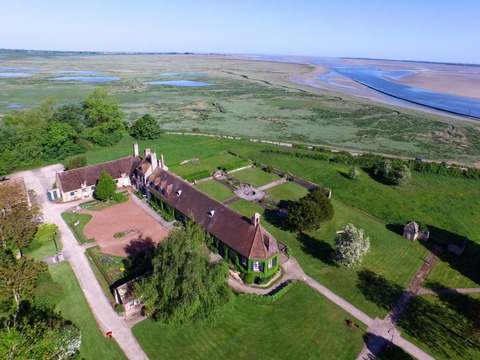
IMPORTANT DATES The workshop is from the 1st to the 5th of June 2026 (it will start around noon on Monday and end around noon on Friday). LOCATION The conference will take place at Hôtel Le Cap Hornu Saint-Valery-sur-Somme
Access To reach the hotel, the easiest way is to take a TER to Noyelles-Sur-Mer. From there, there are several options: - you can take the touristic train to Saint-Valery (https://www.chemindefer-baiedesomme.fr/fr/chemin-de-fer-de-la-baie-de-somme). The departure times on Monday are 11h35 (which is perfect if you take the TER arriving at 11h24 at Noyelles), 15h05, 16h35 and 18h05. It costs 18,90€ for a roundabout trip (-25% if you show your SNCF ticket). Once in Saint-Valery, you can either take a taxi or walk (3km). If you take the 11h35 train, we will be there to lead to way to the hotel; - you can take the bus 706 (https://trans80.hautsdefrance.fr/horaire/585). The departures times on Monday are 9h48, 12h35, 17h41 and 18h35. It costs 1€ per trip (to pay cash on the bus). You should ask the driver to stop at "Croix l'Abbé". You then have to walk 1.5km; - you can take a taxi (15 minutes drive).
ORGANIZERS Felipe Arbulú Nicolás Bitar Fabien Durand France Gheeraert Samuel Petite SPONSORS
|